

Shoulder instability occurs when the shoulder joint repeatedly slips, partially dislocates, or fully dislocates from its normal position. This can cause pain, weakness, or loss of confidence in the shoulder, and difficulty engaging in sport, work, or everyday activities. Dr Richard Dallalana offers shoulder stabilisation surgery for patients with shoulder instability, particularly when non-surgical treatment has not restored stability or when there is a high risk of repeat dislocation.
This page explains the main types of shoulder stabilisation surgery, including Anterior Stabilisation (Bankart Repair), Latarjet Stabilisation, and Posterior Stabilisation, and how treatment is tailored to each patient’s shoulder anatomy, activity level, and goals:
The shoulder is the most mobile joint in the body, allowing a wide range of movement for sport, work, lifting, reaching, and everyday activities. This mobility also means the shoulder relies heavily on the surrounding soft tissues, including the labrum, ligaments, capsule, rotator cuff muscles, and surrounding shoulder muscles, to keep the joint stable. A shoulder dislocation occurs when the ball of the upper arm bone comes out of the shoulder socket. In some cases, the shoulder may only partially slip out and then return to position. This is known as a subluxation. When the shoulder repeatedly dislocates, slips, or feels unstable, it is commonly referred to as recurrent shoulder instability. Recurrent shoulder instability may develop after a traumatic shoulder dislocation, such as a sporting injury or fall. It can also occur in people with naturally looser joints.
When the shoulder dislocates, a cartilage rim around the socket, called the labrum, may tear. The ligaments which assist the labrum to keep the shoulder in place are usually damaged at the same time. These structures cannot heal by themselves. In some patients, repeated dislocations can also lead to bone loss from the shoulder socket or a compression injury to the humeral head, which may increase the risk of further instability.
Symptoms of recurrent shoulder instability may include:
Symptoms of recurrent shoulder instability may include:
Shoulder stabilisation surgery may be considered when a shoulder continues to dislocate, partially dislocate, or experience pain despite appropriate non-surgical management. This may include physiotherapy, activity modification, strengthening exercises, and avoidance of risky activities.
Surgery is considered after a single dislocation event if labral, bone or ligament damage is confirmed on MRI in active individuals.
In younger, active patients, particularly those involved in collision sport, overhead or throwing sports, or physically demanding work, the risk of repeat shoulder dislocation is very high. In these cases, early specialist assessment and imaging with MRI can confirm the nature of the damage and provide an early opportunity to consider surgical stabilisation surgery to reduce the likelihood of further instability.
The most appropriate procedure depends on the direction of instability, the degree of soft tissue damage, whether there is bone loss, and the patient’s activity goals. For example, Anterior or Posterior stabilisation (labral and ligament repair) may be suitable when the main injury involves the labrum and ligaments. Latarjet Stabilisation is considered when there is significant bone loss or a higher risk of recurrence due to high level sports demands or workplace requirements.
The decision to proceed with shoulder stabilisation surgery is made after a careful assessment of symptoms, examination findings, imaging results, and individual lifestyle goals.
A physical examination is then performed to assess shoulder movement, strength, stability, joint laxity, and signs of labral or ligament injury. The opposite shoulder may also be examined, particularly if there is concern about generalised joint laxity or multidirectional instability.
Imaging is used to assess the shoulder joint in more detail. This may include X-rays, MRI, CT scans, depending on the injury pattern and the information required for surgical planning. An MRI is the preferred scan to identify damage to labrum, ligaments, capsule, rotator cuff tendons, and cartilage.
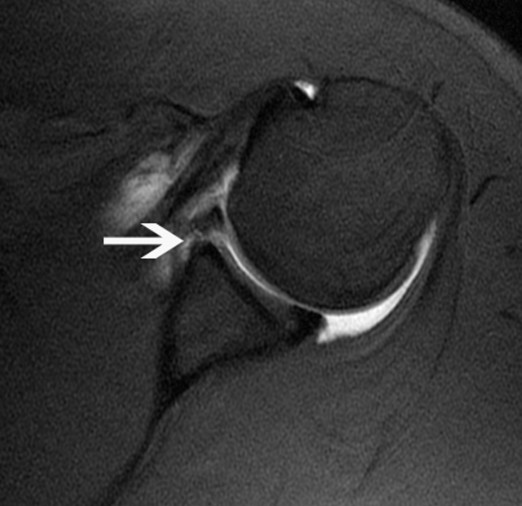
A CT scan may be recommended when there is concern about bone loss, particularly after recurrent dislocations. CT imaging can help assess the shape of the shoulder socket, the amount of glenoid bone loss, and any compression injury to the humeral head, often referred to as a Hill-Sachs lesion.
This information helps guide whether the shoulder is best treated with an Anterior Stabilisation (Bankart Repair), Latarjet Stabilisation, Posterior Stabilisation, or another tailored approach. The aim is to choose a procedure that addresses the specific cause of instability and supports a stable return to everyday activities, work, and sport.
Anterior shoulder stabilisation, commonly referred to as a Bankart repair, is a surgical procedure used to treat shoulder instability when the shoulder repeatedly slips or dislocates forwards. This is the most common direction of shoulder instability and often occurs after a traumatic shoulder dislocation. When the shoulder dislocates forwards, the labrum at the front of the shoulder socket often tears away from the bone. This injury is called a Bankart lesion. The labrum is an important stabilising structure that helps deepen the shoulder socket and provides an attachment point for the ligaments that support the joint. A tear of the labrum and the nearby ligaments of the shoulder cannot heal by themselves, and the shoulder may remain unstable. This can lead to further episodes of dislocation, pain, weakness, or a feeling that the shoulder may “slip out” during certain positions (subluxation), particularly when the arm is lifted overhead or moved away from the body.
During an arthroscopic Bankart repair, small keyhole incisions are made around the shoulder. A camera is used to view the joint, and specialised instruments are used to repair the torn labrum and tighten the stretched capsule and ligaments. Small plastic anchors are usually placed into the edge of the shoulder socket to reattach the labrum and restore stability to the front of the shoulder.
The aim of Bankart repair is to repair the damaged soft tissue restraints at the front of the shoulder and reduce the risk of further instability. It may be particularly suitable when there is a labral and ligament injury without significant bone loss, or in the case of a fresh tear after a first dislocation. In some patients, especially those with significant bone loss and repeated dislocations, high-risk contact sport participation, or high risk occupations, a Bankart repair may not be the most appropriate procedure. In these cases, other stabilisation procedures including a bone transfer, such as Latarjet shoulder stabilisation, may be considered.
Recovery after anterior shoulder stabilisation involves a structured rehabilitation program. This usually includes a period of sling protection, followed by gradual restoration of shoulder movement, strength, and control. Return to sport or higher-demand activity is guided by healing, strength, stability, and the advice of the treating team.
Some complications related to the procedure occur more frequently than with soft tissue procedures, and these risks need to be weighed up against the benefits. There is a higher risk of infection and nerve damage. Implanted metalware may need to be removed. Movement range may be slightly restricted.
All risks related to the procedure will be discussed at the time of consultation to enable an informed decision to be made.
As with any shoulder stabilisation procedure, the decision to perform a Latarjet is based on a careful assessment of symptoms, dislocation history, physical examination, imaging findings, sporting or work demands, and individual goals. Recovery after Latarjet shoulder stabilisation is a staged process requiring approximately 5 months to return to high-risk sports.
When the shoulder slips backwards, the posterior labrum, capsule, and ligaments at the back of the shoulder may become stretched or torn. This can reduce the stability of the shoulder joint and cause symptoms such as pain, clicking, catching, weakness, or a feeling that the shoulder may “shift” or “give way”. It is not so common to experience repeated episodes of actual full dislocation in a posterior direction, in contrast to anterior instability when this is common.
Posterior labral tearing and subsequent problems with posterior instability are seen in many patients with no clear recollection of an injury. A minor fall or sports injury as a teenager or young adult is often the culprit and is enough to tear the labrum and then go unnoticed for a time until a new injury brings it to light. The shape of the shoulder blade including the socket and surrounding bone may also predispose a person to posterior instability.
During arthroscopic posterior shoulder stabilisation, small keyhole incisions are made around the shoulder. A camera is used to assess the joint, and specialised instruments are used to repair the damaged labrum and tighten the stretched capsule and ligaments at the back of the shoulder. Small plastic anchors are used to hold the thread which reattaches the posterior labrum to the shoulder socket.
In rare cases, a bone graft to the back of the socket may be required, or a re-shaping (osteotomy) of the socket itself to reduce the backwards slope.
Posterior shoulder stabilisation may be considered for patients with:
The aim of posterior shoulder stabilisation is to restore stability at the back of the shoulder joint, improve confidence and eliminate pain in the shoulder, and return to desired sports or work.
Recovery involves a structured rehabilitation program, usually beginning with a 6-week period in a sling or specific external rotation bracing. Movement and strengthening are then gradually progressed. Return to sport, gym, or physically demanding work is guided by comfort, strength and minimum timeframes.
The timing of return to driving, work, gym, sport, or heavy activity varies between patients. It depends on the type of stabilisation procedure, the demands of the activity, healing progress, strength, shoulder control, and the risk of reinjury. Patients involved in contact sport, overhead sport, throwing sports, weight training, or physically demanding work may require a longer and more structured rehabilitation program before returning to full activity.
Successful recovery relies on following the rehabilitation plan carefully and avoiding doing too much too soon. Returning to higher-demand activity before the shoulder has healed and regained adequate strength may increase the risk of pain or further instability.
Dr Dallalana and your physiotherapist will guide your progression based on your surgery, symptoms, shoulder function, and recovery goals.
The risk of ongoing instability despite stabilisation surgery varies between patients. Factors that may influence this include the type of instability and surgical procedure performed, the presence of bone loss, the quality of the labrum and ligaments, age, activity level, sporting demands, and whether the shoulder is exposed to high-risk positions. Further surgery may be required in some circumstances.
Recovery also requires commitment to a structured rehabilitation program. Doing too much too soon, returning to sport before the shoulder has healed, or not completing rehabilitation may increase the risk of failure of the procedure to adequately stabilise the shoulder.
The decision to proceed with surgery should be based on a careful discussion around expected benefits, potential risks, alternative treatment options, and your individual goals. Dr Dallalana will take your individual circumstances into consideration before recommending the most appropriate treatment approach.
If you have experienced a shoulder dislocation, repeated subluxation episodes, pain, or ongoing concern that your shoulder may slip out again, a specialist shoulder assessment can help clarify the cause and guide the next steps in treatment.
Message sent