
Elbow arthritis is a condition where the smooth cartilage lining the elbow joint gradually wears away. Cartilage allows the joint to move smoothly and without friction. When this protective surface becomes damaged or lost, elbow movement can become painful, stiff, and increasingly restricted. Elbow arthritis can interfere with everyday activities such as lifting objects, gripping, pushing, pulling, using tools, or participating in sport and recreational activities.
Over time, these factors can accelerate joint degeneration and cartilage loss.
As cartilage gradually wears away, the joint surfaces become rough and irregular. Movement of the elbow then creates friction, which leads to inflammation within the joint and contributes to pain.
As arthritis progresses further, the joint space narrows and may eventually disappear on X-ray imaging. This is often described as “bone-on-bone” arthritis.
Diagnosis involves clinical assessment and imaging to determine the severity and pattern of joint degeneration.
These findings help guide treatment planning and identify any associated problems such as nerve compression.
In selected patients, particularly in earlier stages of arthritis, arthroscopic surgery may be recommended.
This minimally invasive procedure may involve:
Arthroscopic surgery does not restore cartilage or stop arthritis progression, but it may improve pain, motion, and mechanical symptoms in selected patients.
For advanced elbow arthritis, joint replacement surgery may be considered when symptoms are severe and non-operative measures no longer provide adequate relief. Elbow replacement surgery involves replacing damaged joint surfaces with prosthetic components designed to improve pain and restore movement.
Types of elbow replacement may include:
The most appropriate option depends on factors such as bone quality, severity of joint damage, age, activity level, and functional demands.
Dr Richard Dallalana will carefully assess your elbow and discuss the most suitable surgical option, including expected outcomes and prosthesis longevity.
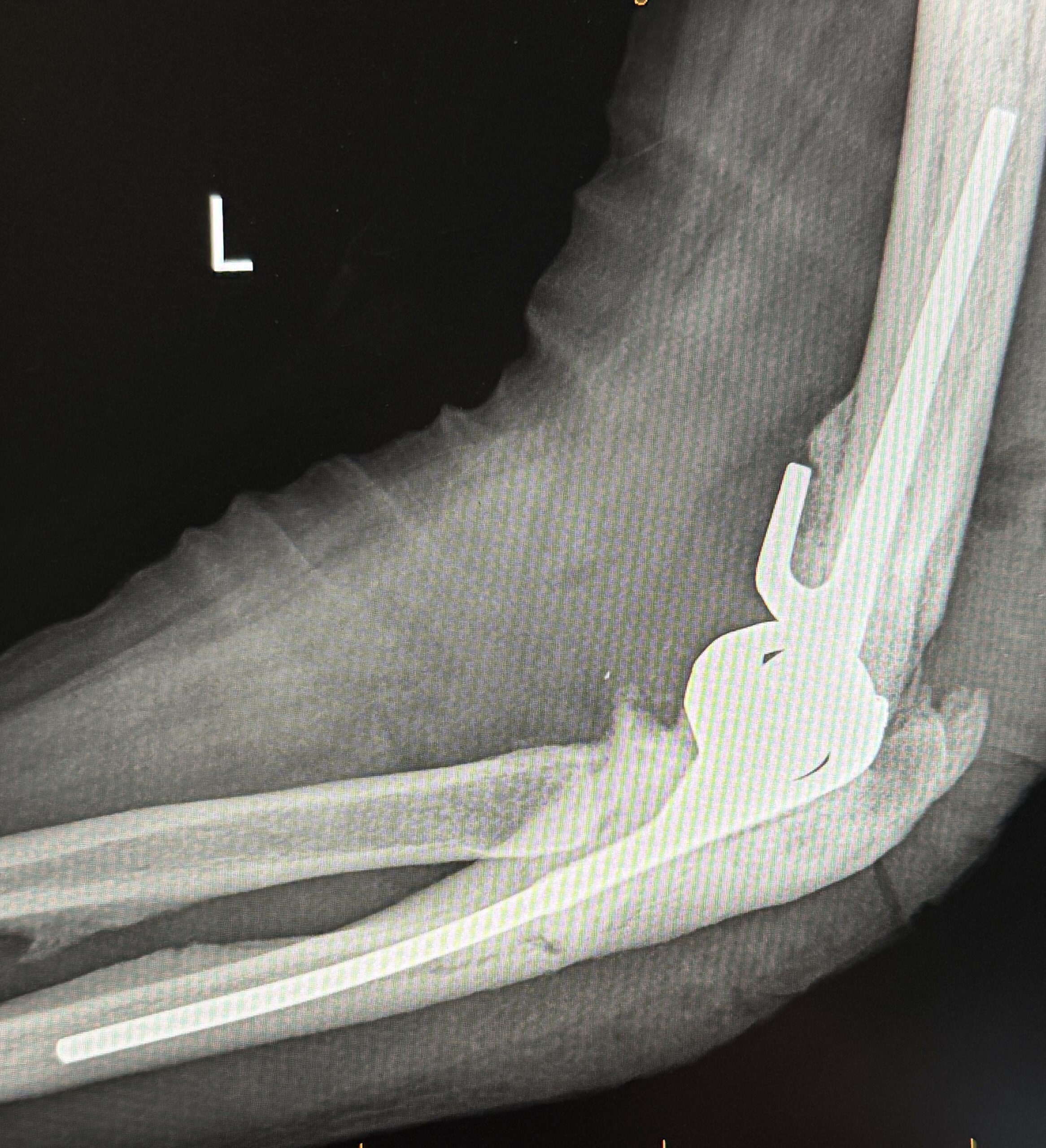
Dr Richard Dallalana provides specialist assessment of elbow arthritis to determine the most appropriate management plan based on your individual needs.
Message sent