

Elbow Conditions

Elbow Arthritis

Elbow Arthritis: Diagnosis, Symptoms and Treatment Options

Elbow arthritis is a condition where the smooth cartilage lining the elbow joint gradually wears away. Cartilage allows the joint to move smoothly and without friction. When this protective surface becomes damaged or lost, elbow movement can become painful, stiff, and increasingly restricted.
Elbow arthritis can interfere with everyday activities such as lifting objects, gripping, pushing, pulling, using tools, or participating in sport and recreational activities.

What Causes Elbow Arthritis?

The underlying cause of elbow arthritis varies between individuals. In many cases, a clear cause cannot be identified. When no obvious cause is found, this is traditionally referred to as primary arthritis. When arthritis develops as a result of a known injury or medical condition, it is described as secondary arthritis.

1

Primary Elbow Arthritis

Primary elbow arthritis develops gradually without a specific injury or event. Factors that may increase the likelihood of developing primary arthritis include:
Primary elbow arthritis is most commonly osteoarthritis.

2

Secondary Elbow Arthritis

Secondary elbow arthritis develops when cartilage damage occurs due to an identifiable cause, such as:

Over time, these factors can accelerate joint degeneration and cartilage loss.

What Happens to the Elbow as Arthritis Progresses

As cartilage gradually wears away, the joint surfaces become rough and irregular. Movement of the elbow then creates friction, which leads to inflammation within the joint and contributes to pain. As arthritis progresses further, the joint space narrows and may eventually disappear on X-ray imaging. This is often described as “bone-on-bone” arthritis.

Common symptoms that may be experienced

Other changes commonly occur within the elbow joint:
Unlike the shoulder or hip, elbow arthritis often produces stiffness and mechanical symptoms early in the condition.

Symptoms of Elbow Arthritis

Common symptoms of elbow arthritis include:
Early in the condition, symptoms may occur only with heavier activity. As arthritis progresses, pain and stiffness may begin to interfere with everyday tasks and work duties.

How Elbow Arthritis Is Diagnosed

Diagnosis involves clinical assessment and imaging to determine the severity and pattern of joint degeneration.

Assessment typically includes:

These findings help guide treatment planning and identify any associated problems such as nerve compression.

A detailed medical history and physical examination

X-rays to assess joint space narrowing, bone spurs, and joint alignment

CT or MRI scans when further detail is required to assess bone or cartilage condition

Non-Surgical Treatment Options for Elbow Arthritis

Non-operative treatment is usually the first step in managing elbow arthritis. The primary goal is to reduce inflammation, maintain joint movement, and manage symptoms.
Treatment options may include:
While these treatments do not reverse arthritis, many patients experience meaningful improvement in pain and function. Inflammatory arthritis is typically managed in conjunction with a rheumatologist using specialised medications.

Surgical Treatment Options for Elbow Arthritis

Surgery may be considered when non-operative treatments no longer provide adequate relief or when elbow stiffness and pain significantly affect daily function.
Arthroscopic (Keyhole) Elbow Surgery

In selected patients, particularly in earlier stages of arthritis, arthroscopic surgery may be recommended.

This minimally invasive procedure may involve:

  • Removal of inflamed joint lining (synovectomy)
  •  Removal of loose bodies or cartilage fragments
  • Removal of bone spurs
  • Capsular release to improve elbow movement


Arthroscopic surgery does not restore cartilage or stop arthritis progression, but it may improve pain, motion, and mechanical symptoms in selected patients.

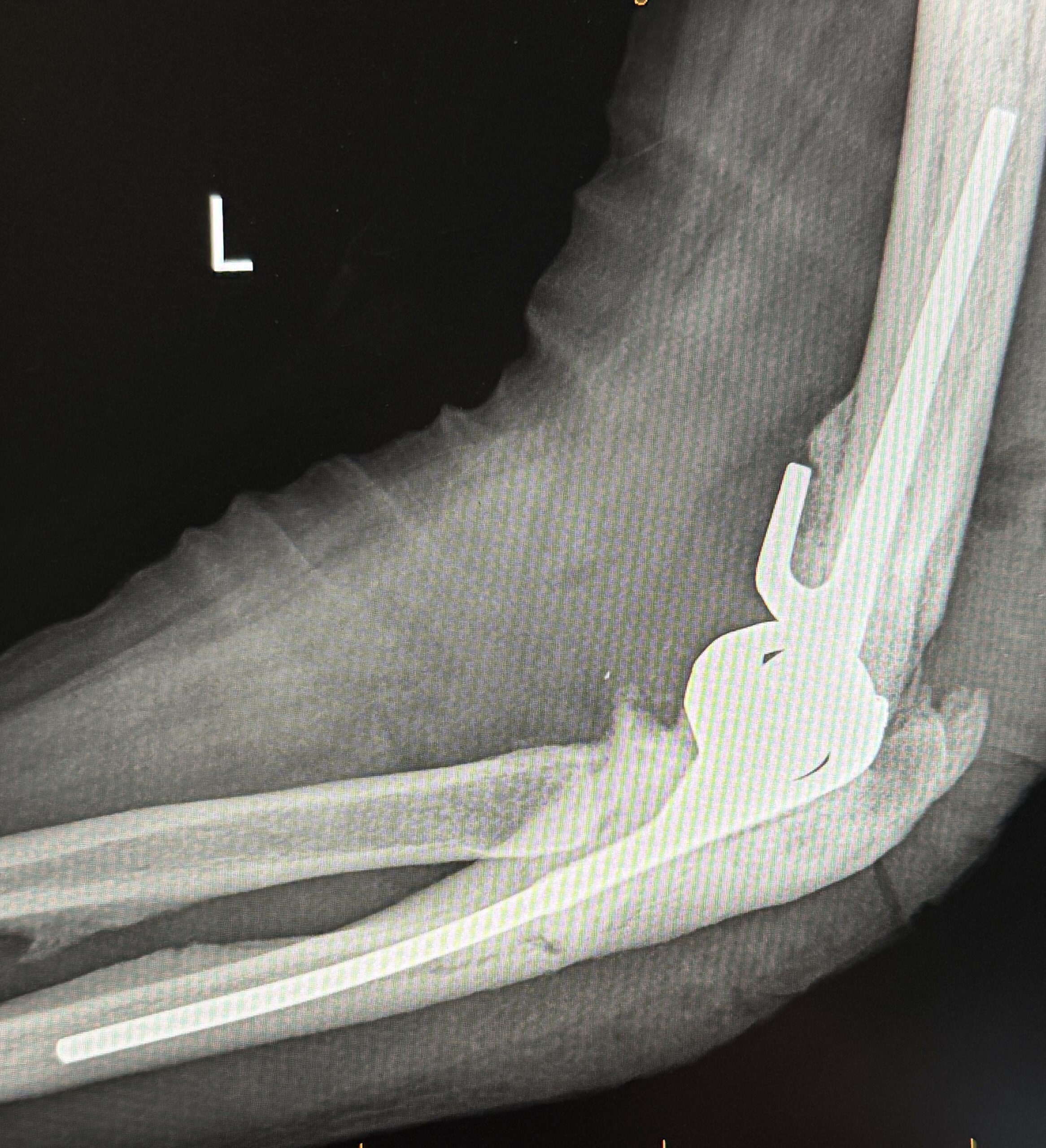
For advanced elbow arthritis, joint replacement surgery may be considered when symptoms are severe and non-operative measures no longer provide adequate relief. Elbow replacement surgery involves replacing damaged joint surfaces with prosthetic components designed to improve pain and restore movement.

Types of elbow replacement may include:

  • Total elbow replacement
  • Partial elbow replacement (in selected cases)


The most appropriate option depends on factors such as bone quality, severity of joint damage, age, activity level, and functional demands.

Dr Richard Dallalana will carefully assess your elbow and discuss the most suitable surgical option, including expected outcomes and prosthesis longevity.
Choosing the Right Treatment for Elbow Arthritis

The most appropriate treatment depends on multiple factors, including:

When to Seek Specialist Assessment for Elbow Arthritis

You may benefit from specialist assessment if elbow pain, stiffness, or reduced movement:
Dr Richard Dallalana provides specialist assessment of elbow arthritis to determine the most appropriate management plan based on your individual needs.

If you’re experiencing ongoing pain, stiffness, or reduced movement that is affecting your daily activities or quality of life, a thorough orthopaedic assessment can help determine the cause and guide the most appropriate treatment options for your situation.

Message sent