
Shoulder Conditions

AC Joint Injuries

Acromioclavicular (AC) Joint Injury: Causes, Symptoms and Treatment Options

The acromioclavicular (AC) joint is a small joint at the top of the shoulder where the collarbone (clavicle) meets the acromion (part of the shoulder blade). AC joint injuries are common after falls, sporting impacts, and other direct trauma to the shoulder. They can cause pain on the top of the shoulder, difficulty lifting the arm, and discomfort when lying on the affected side.
The AC joint equally commonly becomes painful and inflamed without a single injury, but through overload such as regular weights training, or through degenerative changes as we age.
AC joint injuries range from mild sprains to complete separations, and the most appropriate treatment depends on the severity of the injury, your activity level, and how symptoms affect daily life.

What is the AC joint and what does it do?

The AC joint sits at the outer end of the collarbone and forms part of the shoulder’s overall structure. While it is small, it plays an important role in:
The joint is stabilised by several ligaments, including:
Damage to these ligaments is what determines the severity of an AC joint injury.

Common types of AC joint injuries

1

AC joint sprain

AC joint sprain: A mild injury where the ligaments are stretched but not completely torn. The joint remains stable, though pain and swelling may occur. The internal cartilage disc may be damaged and the internal lining is inflamed.

2

AC joint separation

AC joint separation: A more significant injury where the ligaments are torn and the collarbone can shift out of position. This is often referred to as a “separated shoulder.”
Note: A separated shoulder – referring to AC joint injury – is different from a shoulder dislocation, which involves the ball-and-socket joint.

3

AC joint arthritis (wear and tear)

AC joint arthritis (wear and tear): Some people experience AC joint pain due to arthritis rather than acute injury. Arthritis often causes pain with reaching across the body or lifting. It can be due to overload through work or sport, or simply occur as people age.
This page focuses primarily on acute AC joint injuries, though arthritis may be discussed if it contributes to pain.

What causes AC joint injuries?

AC joint injuries are most commonly caused by trauma, including:
A direct impact to the top of the shoulder can force the acromion down while the collarbone remains in place, stressing or tearing the stabilising ligaments.
The collarbone in fact remains in the same place, and the visible deformity is due to the rest of the shoulder being in a lower position.

Symptoms of an AC joint injury

Common symptoms include:
Symptoms may range from mild discomfort to significant pain and functional limitation depending on injury severity.
How AC joint injuries are graded

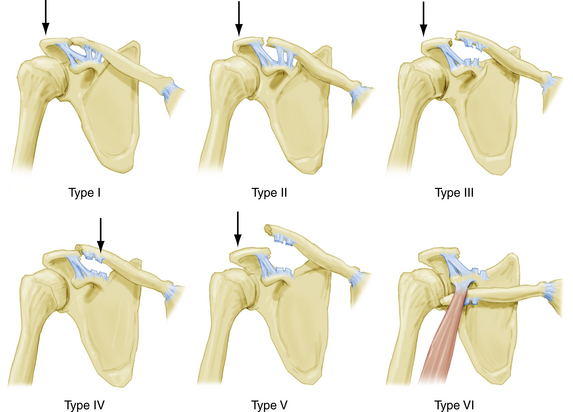
AC joint separations are often described using a grading system based on ligament damage and displacement. In simple terms:
The grading helps guide treatment decisions, but symptoms, functional needs, and goals are important considerations.

How AC joint injuries are diagnosed

Diagnosis typically involves:
In some cases, additional imaging such as MRI may be used if there is concern about associated shoulder injuries, and to help define the grade of AC separation.

A detailed injury history

Physical examination to assess pain location, stability, and shoulder function

X-rays to evaluate joint alignment and rule out fractures

Can an AC joint injury heal without surgery?

Many AC joint injuries, including separations, can be managed without surgery. Non-operative care aims to reduce pain, restore movement, and rebuild shoulder strength.
Non-operative treatment may include:
Most patients improve with structured rehabilitation, although recovery time varies based on injury severity and activity demands.
The degree of visible deformity in cases of AC separation does not change with non-surgical treatment, however the symptoms can resolve.

When might surgery be considered for an AC joint injury?

Surgical treatment may be considered when:
The decision is individualised and based on the degree of injury, duration of symptoms, patient age and lifestyle goals

When to See a Shoulder Specialist for Frozen Shoulder

A specialist shoulder assessment may be appropriate if you experience:
A specialist review can help clarify the diagnosis, determine whether frozen shoulder is the primary cause of your symptoms, and guide the most appropriate management pathway based on your individual presentation.

Surgical options for AC joint injuries

AC joint reconstruction:

AC joint reconstruction aims to restore stability by reconstructing or repairing the coracoclavicular ligaments and improving alignment of the collarbone. This may involve:
The decision is individualised and based on the degree of injury, duration of symptoms, patient age and lifestyle goals

AC joint clean up (debridement)

In cases where AC joint pain is driven by inflammation/arthritis rather than separation, arthroscopic debridement including removal of a small portion of the collarbone may be considered.
This is generally reserved for persistent symptoms after non-operative care
Dr Dallalana will explain the appropriate options based on injury type and imaging.

Recovery and rehabilitation after an AC joint injury

Recovery from an AC joint injury depends on the severity of the injury and whether surgery is required. Rehabilitation is a structured process and typically involves:

Specialist assessment and individualised care

AC joint injuries can vary significantly in severity, symptoms, and functional impact, and management is not one-size-fits-all.
Dr Richard Dallalana provides specialist assessment of AC joint injuries and shoulder trauma, with a focus on:
This structured approach helps ensure treatment decisions are appropriate for your individual presentation.

When to See a Shoulder Specialist for AC Joint Injuries

A specialist review may be helpful if:

There is a visible deformity after injury

You are unable to return to work or sport as expected

Weakness, instability, or persistent night pain continues

Early specialist opinion is valuable in the case of high grade injury with visible deformity to determine the need for surgery. Delayed surgery is more complicated usually requiring a ligament reconstruction rather than a smaller procedure enabling the existing torn ligaments to heal.
A thorough shoulder assessment can help confirm the diagnosis, grade the injury, and guide the most appropriate management plan.

If you’re experiencing ongoing pain, stiffness, or reduced movement that is affecting your daily activities or quality of life, a thorough orthopaedic assessment can help determine the cause and guide the most appropriate treatment options for your situation.

Message sent